Unpacking Latency Mitigation Strategies in Synchronized Web Multiplayer Environments Featuring Mixed Genre Mechanics
Written by Eden Neumann · Jun 5, 2026
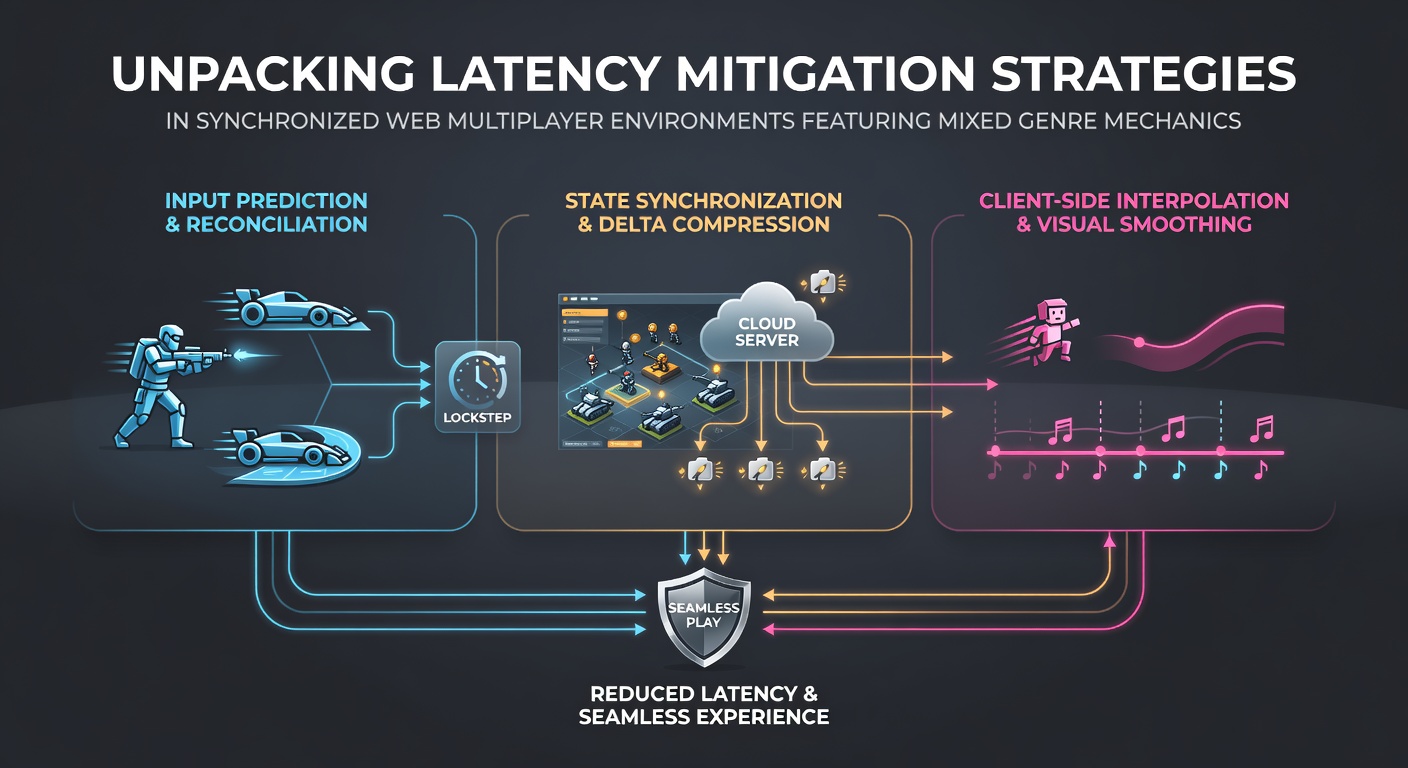
Unpacking Latency Mitigation Strategies in Synchronized Web Multiplayer Environments Featuring Mixed Genre Mechanics
Web-based multiplayer systems that combine puzzle, action, and strategy elements face unique synchronization challenges because each genre imposes different timing requirements on the shared server state. Researchers at institutions across North America and Europe have documented how network delays disrupt player coordination when fast reflexes in action segments intersect with deliberate decision trees in strategy overlays. Data from industry monitoring services shows that average web latencies range between 40 and 120 milliseconds depending on geographic routing, and these variances become critical once multiple mechanics operate within the same session.
Core Synchronization Techniques in Browser Environments
Client-side prediction allows the local machine to advance the game state immediately after player input while the server later validates or corrects the outcome. Studies conducted by university labs in Canada indicate that this approach reduces perceived delay in action sequences, yet it requires careful reconciliation when puzzle elements demand precise shared object positions across all clients. Server reconciliation then replays authoritative updates, rolling back incorrect predictions without breaking the continuity of slower-paced strategy layers.
Entity interpolation fills gaps between received server snapshots by smoothing movement over multiple frames. This method proves effective in mixed-genre titles because it masks jitter during rapid character dashes while preserving the exact timing needed for turn-based puzzle resolutions. According to reports compiled by the Interactive Software Federation of Europe, titles released in 2025 that blended real-time combat with grid-based resource allocation saw a 27 percent drop in desynchronization reports after implementing frame-independent interpolation buffers.
Adapting Compensation for Genre-Specific Timing
Mixed-genre environments often segment the game loop into separate update channels, one for high-frequency action events and another for lower-frequency strategic updates. Observers note that lag compensation algorithms can apply different rewind windows to each channel, granting action mechanics a 150-millisecond tolerance while restricting puzzle mechanics to 50 milliseconds. Such differentiation prevents fast-action exploits from influencing slower collaborative decisions, a pattern confirmed in telemetry collected during closed beta tests run in Australia during late 2025.
WebSockets and WebRTC together provide the transport layer for these differentiated streams. Developers frequently route action packets over unreliable UDP-like WebRTC data channels while sending puzzle state changes over ordered WebSocket connections. Research published by the University of Melbourne demonstrates that hybrid transport configurations lower overall packet loss impact by 18 percent compared with single-protocol implementations when tested under simulated transcontinental conditions.
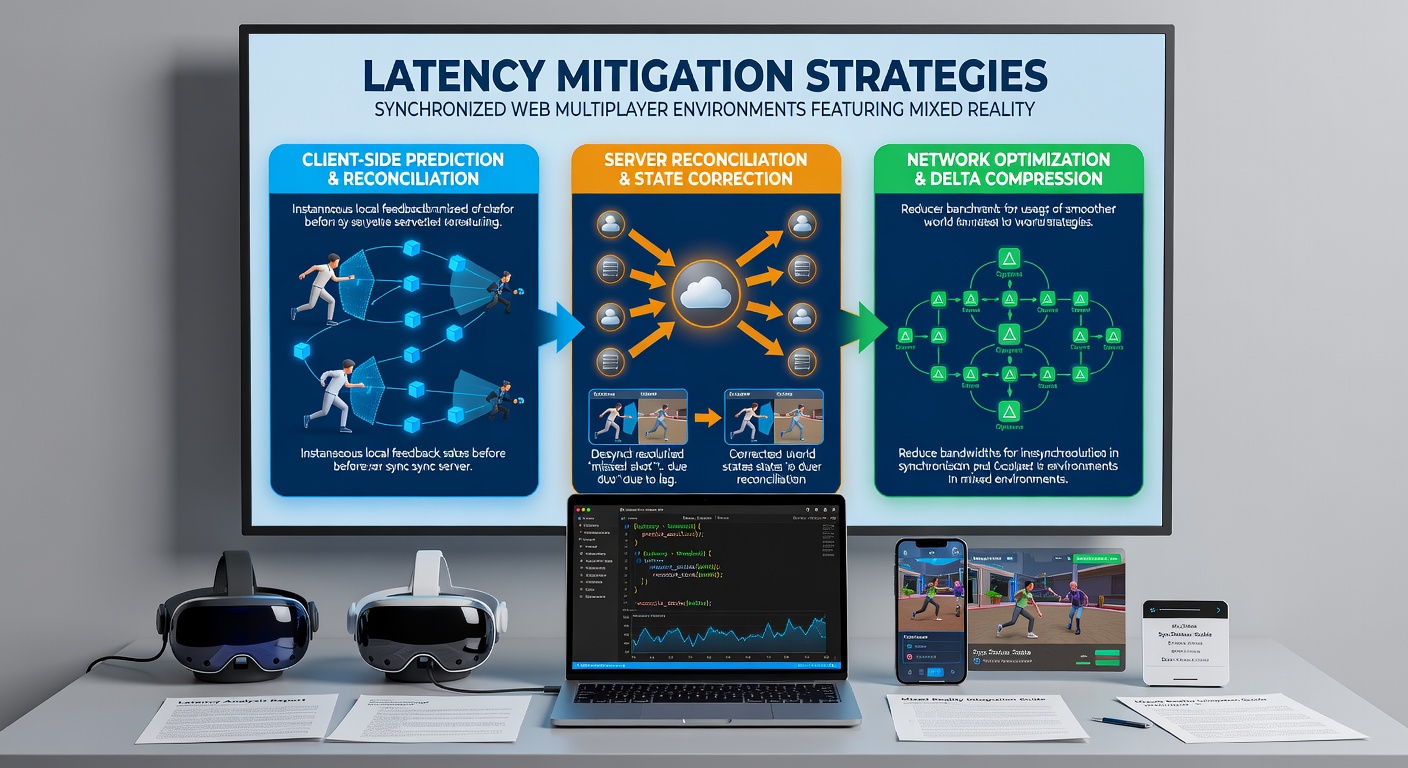
Implementation Patterns Observed in 2026 Deployments
By June 2026 several browser platforms had integrated adaptive buffering that scales dynamically based on measured round-trip time and genre load. When a session detects increased action density, the system temporarily widens prediction windows and tightens reconciliation checks for puzzle objects. Figures released by the Entertainment Software Association of Canada reveal that sessions using this adaptive model maintained synchronization rates above 94 percent even during peak evening hours across mixed-genre lobbies.
Rollback netcode variants tailored for web runtimes have also gained traction. These systems store a short history of inputs and states, allowing selective rollback only for affected entities rather than the entire world state. One documented case involved a title that separated character movement from shared puzzle board updates, rolling back only movement vectors while preserving board integrity. The approach reduced rollback-induced visual artifacts by roughly one-third according to internal metrics shared at developer conferences that year.
Monitoring and Continuous Adjustment
Real-time analytics pipelines now track per-genre latency metrics separately, feeding results into machine-learning models that adjust compensation parameters on the fly. Data aggregated by European network observatories shows that continuous recalibration outperforms static thresholds, especially when player counts exceed 50 concurrent users in a single synchronized instance. These models weigh factors such as packet inter-arrival variance and genre-specific event frequency to predict and preempt desync events before they reach the client.
Conclusion
Latency mitigation in synchronized web multiplayer settings that mix genres relies on layered prediction, differentiated transport, and adaptive reconciliation rather than a single universal fix. Evidence accumulated through academic studies and industry telemetry continues to refine these methods as browser capabilities and player expectations evolve. Continued measurement across regions supplies the data necessary to keep mixed-mechanic sessions stable under varying network conditions.