Player Habit Loops Emerging from Color-Coded Feedback in Evolving Web Strategy Puzzle Hybrids
Written by Eden Neumann · Jul 17, 2026
Player Habit Loops Emerging from Color-Coded Feedback in Evolving Web Strategy Puzzle Hybrids
Web strategy puzzle hybrids combine grid-based decision making with layered resource management and players encounter color-coded feedback systems that mark successful moves in green tones while highlighting risks in amber or red shades. These visual signals operate as immediate cues that prompt repeated actions and over time they build structured habit loops where the color appears, the player responds with a specific adjustment, and progress follows as the reward. Data from browser game platforms in early 2026 shows increased session lengths when these color systems remain consistent across evolving game updates.
Mechanics of Color Feedback in Hybrid Titles
Developers implement color gradients that shift based on resource efficiency or threat levels so a move that optimizes supply lines turns the interface panel a steady blue while an inefficient choice triggers a pulsing orange overlay. Players learn to associate these hues with particular outcomes and this association strengthens through repeated exposure during short browser sessions that last between five and fifteen minutes. Studies from the Interactive Digital Media Lab at Simon Fraser University indicate that color differentiation reduces decision time by up to thirty percent in strategy layers once the pattern becomes familiar.
Game engines update these palettes dynamically during live events and the changes appear without requiring page reloads because HTML5 canvas elements handle real-time recoloring. Observers note that when a puzzle stage introduces new color meanings mid-campaign players adapt within two to three playthroughs and maintain the same action sequences that previously earned positive feedback. This adaptation pattern appears across multiple titles that blend tile placement with turn-based combat elements.
Formation of Habit Loops Through Visual Cues
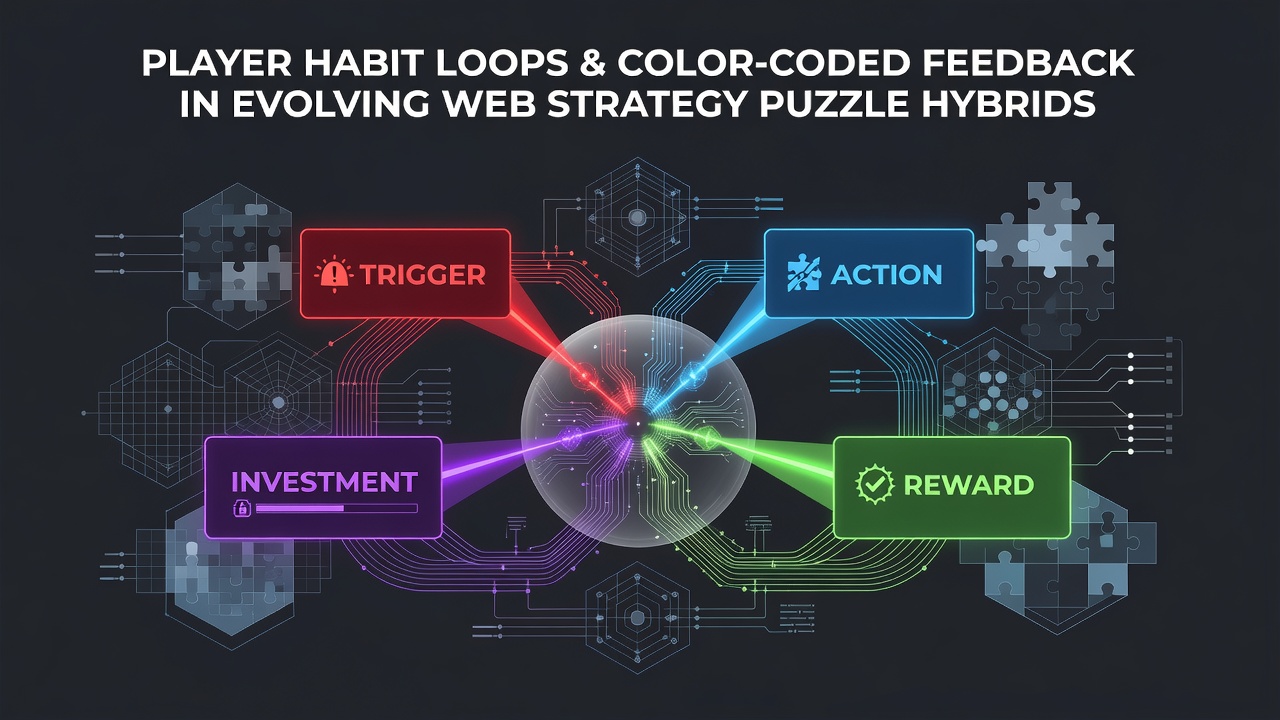
The loop begins when the color cue registers on screen prompting an immediate player response such as reallocating units or rotating puzzle pieces. The action then triggers a reward state where the board advances and the next color confirmation appears which restarts the cycle. Research published by the European Interactive Software Federation in 2025 tracked thousands of anonymous browser sessions and found that titles using four or more distinct color states maintained higher daily return rates compared with monochrome interfaces.
Longer sessions emerge because each completed loop delivers small dopamine-linked progress markers without requiring external narrative rewards. Data patterns from July 2026 reveal that players in these hybrids complete an average of 18 color-triggered loops per session when the feedback remains predictable yet gradually increases in complexity across levels. The consistency allows the routine to embed while the increasing difficulty prevents the loop from becoming automatic and disengaging.
Player Retention Patterns Observed in 2026
Analytics platforms monitoring web multiplayer hybrids report that color-coded progression systems correlate with extended play streaks during evening hours when users log in from multiple regions. One documented case involved a strategy puzzle title that introduced a new red warning layer for resource shortages and within weeks the average number of daily logins rose by twenty-two percent among returning accounts. The shift occurred because players began preemptively scanning for the color before committing moves and this scanning behavior became part of their established routine.
Cross-device synchronization further reinforces these loops since color states carry over from desktop sessions to mobile browsers without visual reset. Industry reports from the Australian Games Association highlight that seamless color continuity across platforms reduces drop-off rates at the start of new stages because players recognize familiar signals immediately upon resuming play. The effect holds even when sessions occur days apart because the visual memory of the color mapping persists.
Integration with Evolving Game Structures
As developers expand hybrid titles they layer additional color meanings onto existing mechanics so a green success indicator might later incorporate a secondary hue shift to denote bonus multipliers. This layering keeps the core loop intact while introducing fresh decision branches that players incorporate into their established response patterns. Figures from browser telemetry collected through June 2026 show that games employing this incremental color expansion retain active user bases for an average of four additional months compared with titles that overhaul feedback systems entirely during updates.
Network effects appear when multiple players share the same color language in cooperative modes because coordinated responses to shared visual cues accelerate collective progress. Observers tracking these interactions note faster alliance formation when color signals remain uniform across participant screens and this uniformity supports sustained group engagement through repeated joint sessions.
Conclusion
Color-coded feedback continues to shape habit formation in web strategy puzzle hybrids by providing reliable visual anchors that guide player actions and reward completion. Data collected through mid-2026 demonstrates consistent patterns of loop reinforcement across evolving titles and these patterns support longer engagement without relying on external narrative drivers. The systems evolve alongside game content yet preserve the core cue-response-reward structure that players internalize over successive sessions.