Mapping Seasonal Player Flow Across Genre Blending Web Entertainment Platforms
Written by Greta Beck · Aug 4, 2026
Mapping Seasonal Player Flow Across Genre Blending Web Entertainment Platforms
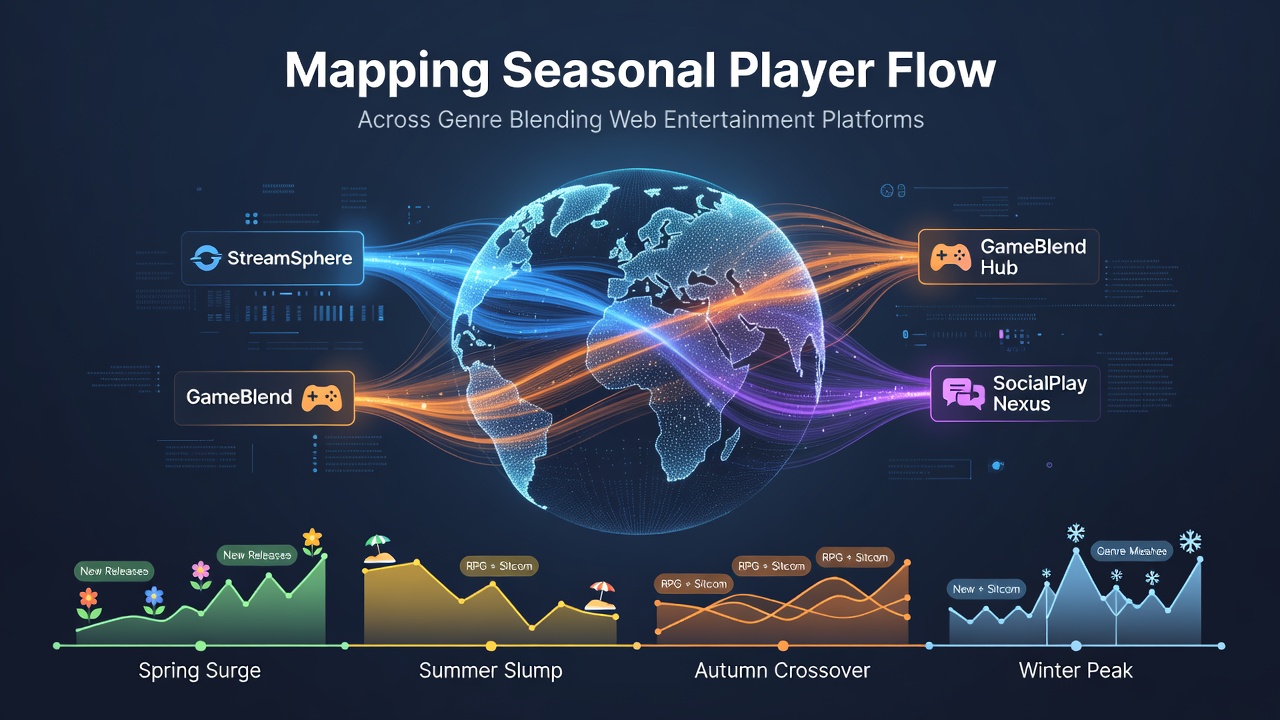
Seasonal shifts in player engagement appear across web entertainment platforms that combine multiple genres, and researchers track these movements through aggregated usage data collected from millions of sessions each quarter. Platforms that blend puzzle mechanics with action sequences and strategy layers see distinct patterns emerge as external factors like weather, school schedules, and holiday periods influence participation rates. Data from industry tracking services shows that participation in blended titles rises notably during transitional months, while core player bases migrate toward specific mechanic combinations depending on the time of year.
Tracking Movement Patterns Through Aggregated Metrics
Analysts map player flow by examining session length, genre selection sequences, and return rates across calendar quarters, and organizations such as the Entertainment Software Association compile annual reports that break down these trends by region and platform type. In North American markets, browser-based hybrids register increased logins from late spring through early autumn, whereas winter months correlate with longer dwell times on titles featuring deeper strategic layers. European data sets reveal similar cycles yet with slightly offset peaks tied to regional vacation schedules, and observers note that cross-genre transitions occur most frequently during weekends when users sample multiple modes within single sessions.
Mapping tools rely on anonymized telemetry that records entry points, exit points, and mid-session switches between puzzle segments, arcade-style challenges, and resource management screens. These records allow platforms to identify corridors where players move from fast-paced action sequences into slower puzzle resolution phases, and the resulting diagrams highlight recurring loops that repeat across different seasonal windows. August 2026 records, for instance, captured elevated transition rates from outdoor-themed action modules into indoor strategy environments as daylight hours began to shorten in temperate zones.
Regional Variations and Platform Responses
Platforms adjust content rotation schedules based on historical flow maps, and developers release seasonal events timed to anticipated migration waves. In markets monitored by the Interactive Games and Entertainment Association of Australia, summer months show pronounced movement toward collaborative puzzle-action hybrids, while cooler periods favor solo strategy overlays. These patterns hold across both desktop and mobile browser access points, though mobile sessions tend to exhibit shorter overall durations with more frequent genre hops within each visit.
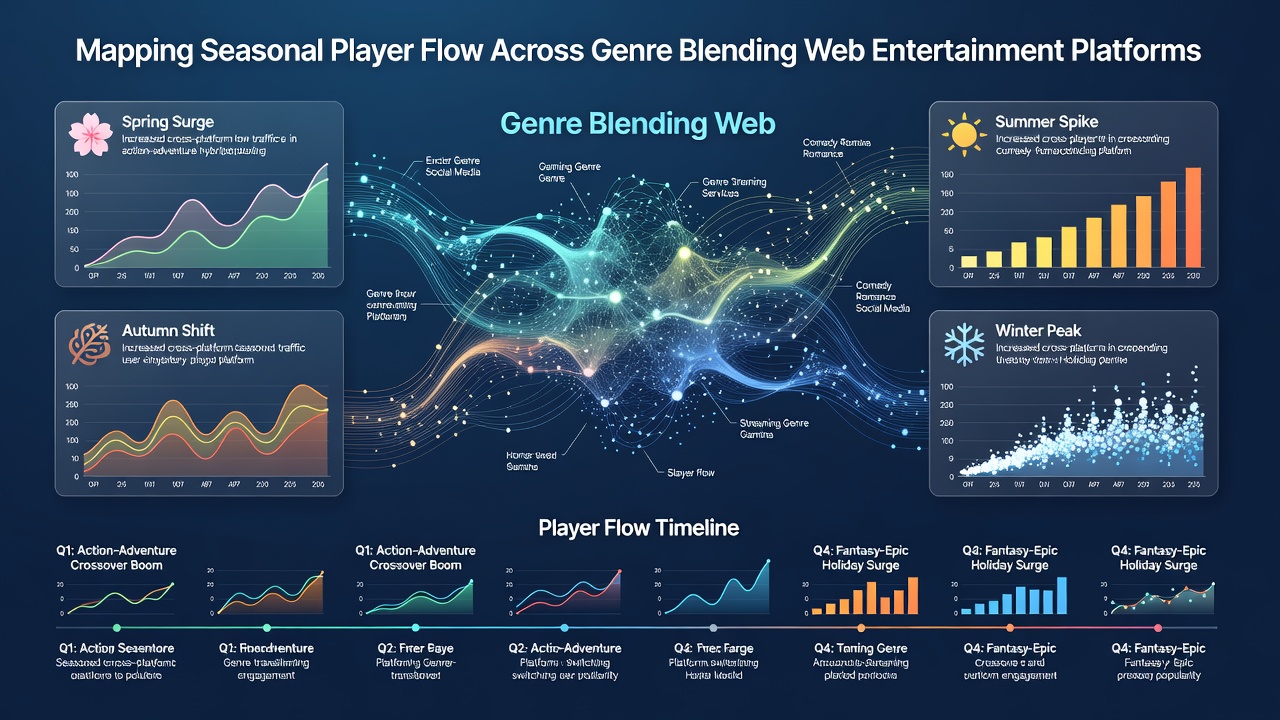
Telemetry studies conducted by university research groups document how weather events and public holidays accelerate or dampen specific flows, and one longitudinal project tracked over 2.4 million unique browser profiles across three years to quantify these effects. Findings indicate that platforms incorporating adaptive matchmaking see reduced drop-off rates when they anticipate seasonal genre preferences and preload relevant modules accordingly. The same studies reveal that players who complete at least three genre transitions within a single week demonstrate higher retention into the following month compared with those who remain in one mode.
Data Sources and Analytical Methods
Flow mapping draws from public datasets released by government statistical agencies and private telemetry aggregators, and researchers cross-reference these with platform-specific API outputs to construct quarterly migration matrices. Canadian digital economy reports, for example, provide baseline participation figures that analysts adjust for seasonal weighting factors derived from browser analytics firms. The resulting visualizations display directed graphs where node size represents active user counts and edge thickness indicates transition volume between genre clusters.
These matrices help identify stable corridors that persist year-round alongside temporary pathways that open only during particular months. Observers note that puzzle-to-strategy corridors strengthen in the first quarter while action-to-puzzle routes gain prominence in the third quarter, patterns that repeat across multiple calendar cycles according to aggregated logs.
Conclusion
Seasonal player flow mapping supplies platforms with concrete indicators for content scheduling and feature prioritization, and continued refinement of telemetry collection methods promises finer resolution of these movement patterns in coming years. Current datasets already demonstrate consistent, measurable cycles that recur across regions and device types, giving developers measurable benchmarks against which to evaluate the performance of genre-blending designs.