Layered Decision Trees Managing Resource Allocation in Browser Multiplayer Strategy Hybrids
Written by Cameron Baumann · Aug 21, 2026
Layered Decision Trees Managing Resource Allocation in Browser Multiplayer Strategy Hybrids
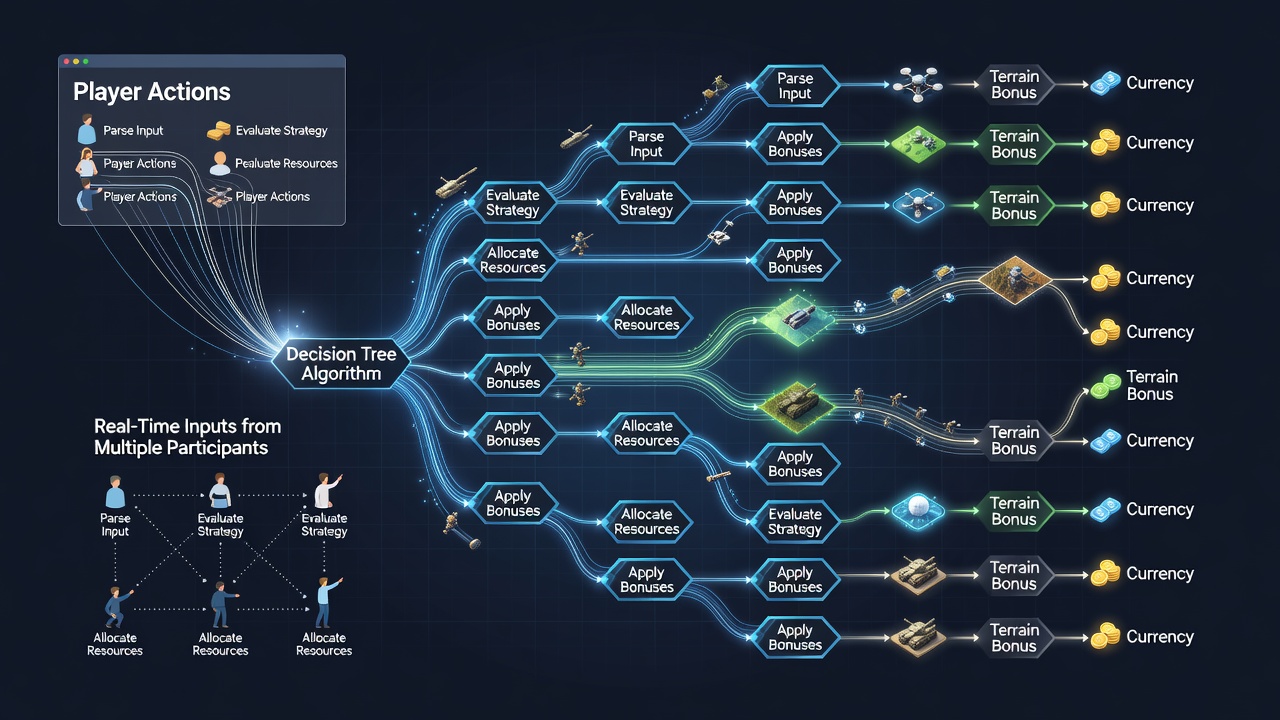
Browser-based multiplayer strategy hybrids rely on algorithms that process player actions through layered decision trees, and these systems allocate resources such as units, currency, and terrain bonuses based on real-time inputs from multiple participants. Data from industry reports indicates that such structures handle concurrent requests by evaluating conditions at each tree level, beginning with input validation and moving through resource availability checks before finalizing distributions.
Core Mechanics of Decision Tree Processing
Each player command triggers a sequence where the first layer confirms action legitimacy, the second assesses current game state variables including unit counts and currency reserves, and deeper layers apply terrain modifiers according to predefined rules. Researchers at academic institutions have documented how these trees branch on conditions like proximity to resources or opponent presence, which allows the system to update shared states without requiring full server recalculations every frame. As of August 2026, platform metrics show average decision tree depths ranging between seven and twelve layers in active titles, with branching factors adjusted dynamically to maintain response times under 150 milliseconds across regions.
Handling Simultaneous Inputs from Multiple Players
Real-time inputs arrive through WebSocket connections, and the algorithm sorts them into priority queues before feeding them into the decision trees. Observers note that currency allocation occurs after unit deployment checks, because terrain bonuses depend on final positions, and this ordering prevents conflicts when two players target the same map sector. Studies from the Entertainment Software Association reveal that synchronization layers use timestamp reconciliation to resolve order disputes, ensuring that each tree processes a consistent snapshot even when latency varies between participants.
Resource Allocation Pathways
Unit allocation follows a path that first subtracts costs from player reserves, then applies terrain modifiers such as movement speed increases on favorable ground or defense reductions in hostile zones. Currency distribution updates occur in parallel branches that reference the same state snapshot, while terrain bonuses recalculate only when unit positions change. Figures from the European Games Developer Federation indicate that optimized trees reduce redundant calculations by 40 percent compared with flat conditional lists, which supports larger player counts without proportional increases in server load.
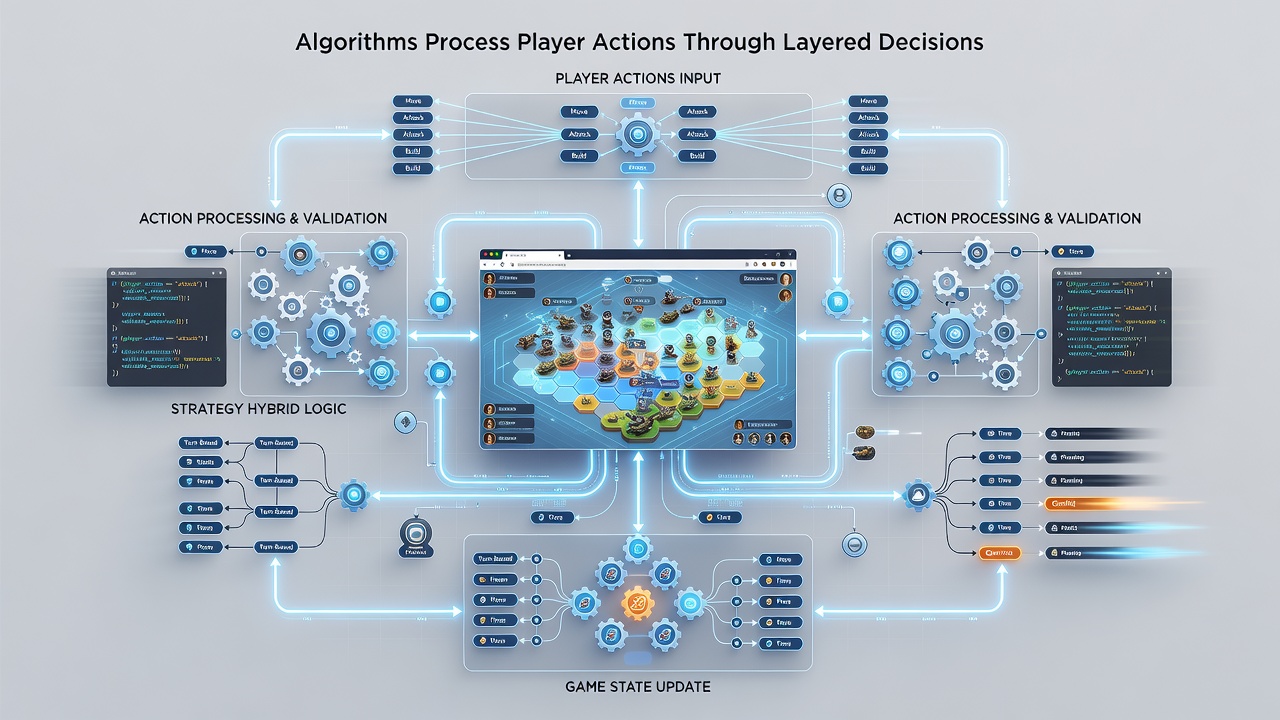
One documented implementation routes terrain bonus evaluations through a dedicated subtree that references elevation and ownership data, and this separation keeps core resource trees focused on quantity limits. When multiple participants issue commands within the same tick window, the system merges compatible branches before committing changes, which minimizes rollback frequency during high-activity periods.
Data Patterns in Engagement and Decision Velocity
Analysis of repeated sessions shows that decision velocity, measured as actions processed per minute, stabilizes after initial matches as players learn typical tree outcomes. Reports compiled by the Interactive Games and Entertainment Association in Australia track how randomization in terrain generation affects subsequent allocation paths, producing measurable shifts in collective strategy formation across thousands of recorded games. These patterns appear because each new terrain configuration forces fresh evaluations at the bonus layer, which in turn influences currency spending priorities in the parent trees.
Conclusion
Layered decision trees continue to serve as the primary mechanism for processing actions and allocating resources in browser-based multiplayer strategy hybrids, and ongoing refinements focus on reducing branch complexity while preserving fairness across simultaneous inputs. Platform operators apply these structures to maintain consistent game states, and the resulting systems scale to accommodate growing participant numbers without altering core allocation logic.