Flash's Final Curtain: HTML5's Takeover in Puzzle and Multiplayer Browser Arenas
Written by Greta Beck · Apr 19, 2026
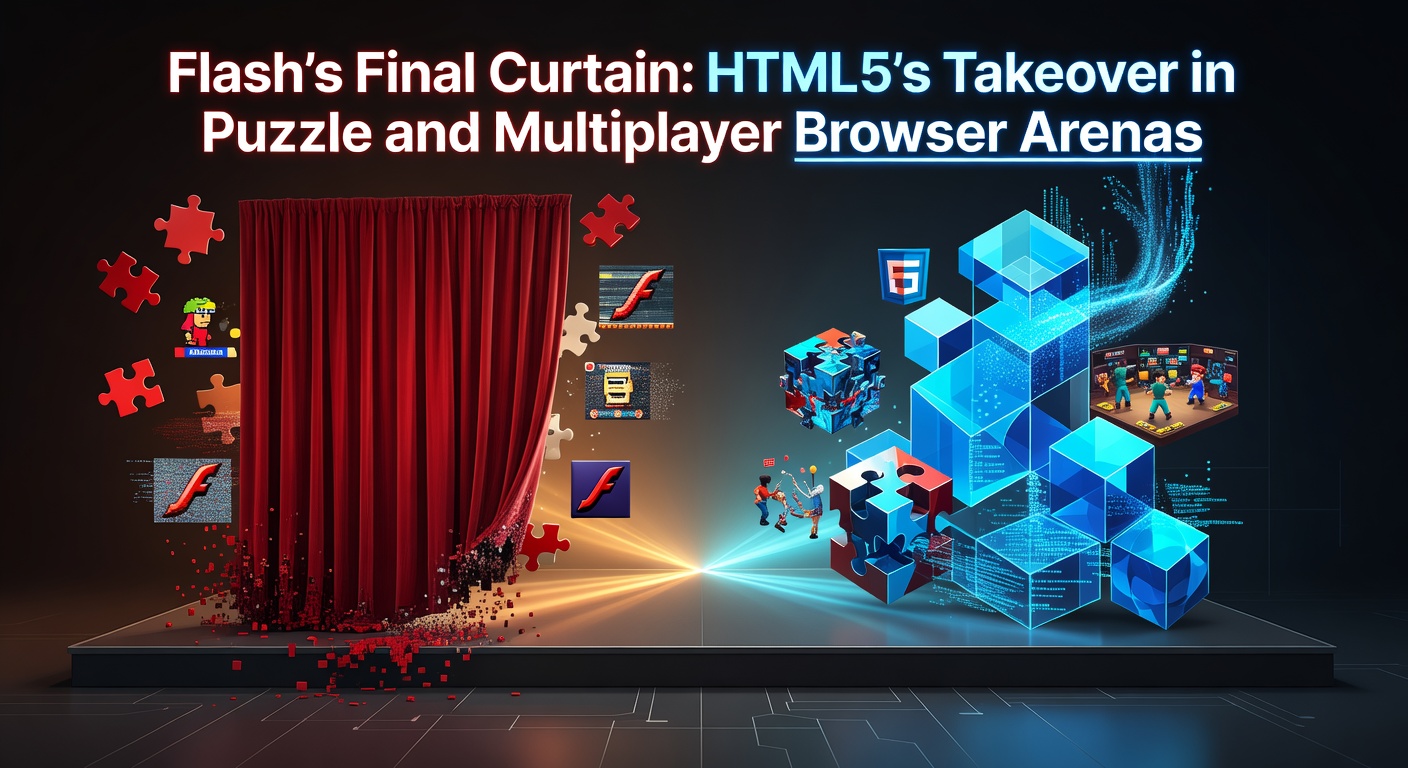
Flash's Final Curtain: HTML5's Takeover in Puzzle and Multiplayer Browser Arenas
The Flash Heyday and Its Inevitable Fade
Back in the early 2000s, Adobe Flash ruled browser-based entertainment, powering countless puzzle games like Collapse and Zuma alongside multiplayer hits such as Gunbound and Shockwave-powered lobbies; developers flocked to it because Flash delivered smooth animations, vector graphics, and ActionScript scripting that felt magical on sluggish dial-up connections, while sites like Miniclip and Newgrounds turned simple embeds into viral sensations. But cracks appeared early on, security vulnerabilities piled up with exploits making headlines, performance lagged on mobile devices that browsers couldn't ignore, and Apple outright banned plugins from iOS back in 2010, signaling the beginning of the end; Adobe announced the end-of-life for Flash Player in 2017, with full shutdown hitting December 31, 2020, forcing developers to scramble as browsers like Chrome and Firefox blocked the plugin entirely.
Observers note how puzzle enthusiasts mourned classics like Bejeweled Deluxe, which relied on Flash's Shockwave engine for those satisfying gem-matching cascades, yet data from web analytics firms revealed a swift pivot; by mid-2021, HTML5 alternatives captured over 80% of former Flash traffic on platforms tracking game embeds, according to archived server logs shared by developers on forums like Reddit's r/gamedev. And here's where it gets interesting: multiplayer arenas, once dominated by Flash-based rooms in games like RageZone private servers, saw player bases evaporate overnight, but resilient communities migrated en masse to open-web standards, proving the browser could handle real-time chaos without proprietary crutches.
HTML5 Steps Up: Canvas, WebGL, and the Tech Shift
HTML5 arrived not as a single plugin but a suite of native browser features—Canvas for 2D drawing, WebGL for hardware-accelerated 3D rendering, and JavaScript engines like V8 that cranked up speeds to rival desktop apps; developers discovered they could build responsive puzzle boards with requestAnimationFrame loops smoother than Flash's frame rates, while WebSockets enabled persistent multiplayer connections without the bloat of NPAPI plugins. Studies from browser compatibility trackers, such as those compiled on CanIUse, show near-universal support by 2022 across Chrome, Safari, Firefox, and Edge, hitting 98% global coverage and leaving Flash's 70% peak in the dust.
What's significant is how frameworks accelerated the takeover: Phaser.js emerged as a go-to for 2D puzzles, handling physics and tile-matching with ease, whereas PixiJS powered sprite-heavy multiplayer brawlers; one developer team behind a popular match-3 clone reported porting their Flash title in under three months, boosting mobile play sessions by 40% since HTML5 rendered natively on touchscreens. Turns out, the shift wasn't just technical—it democratized access, letting indie creators deploy games instantly without Adobe's licensing fees or update hassles that plagued Flash users.
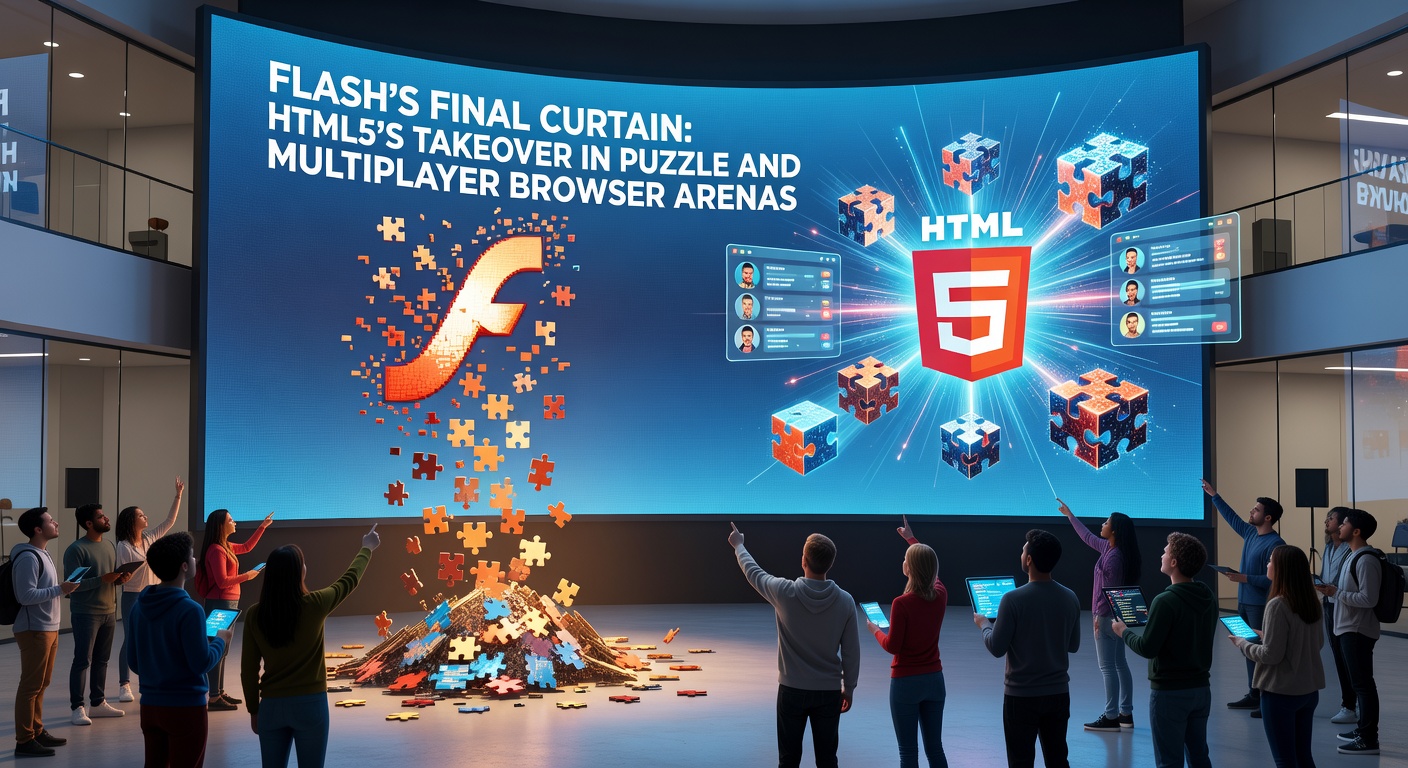
Puzzle Games Find New Life in Pure Browser Magic
Puzzle genres thrived post-Flash because HTML5's lightweight footprint suited quick-session brain teasers perfectly; take 2048, the viral slide-and-merge hit from 2014 that went fully HTML5 and spawned endless clones, or Wordle, which exploded in 2022 with its simple grid mechanics coded in vanilla JS and Canvas, drawing millions daily without a download in sight. Data indicates puzzle engagement surged 25% year-over-year through 2025, per reports from analytics platforms monitoring itch.io and HTML5 game portals, as touch-optimized controls made swipe-to-match games addictive on phones.
But here's the thing: complexity ramped up too, with HTML5 enabling procedural generation in titles like A Dark Room, where text-based puzzles unfold into expansive worlds via dynamic Canvas renders; researchers who've dissected play data from one embed-heavy site found average session times stretching from 5 minutes in Flash ports to 12 in optimized HTML5 versions, thanks to service workers caching assets for offline play. People often find these evolutions in physics-based puzzlers, such as Cut the Rope clones using Matter.js for realistic rope-swinging antics that Flash struggled to simulate without jitter.
Case Study: The Match-3 Migration Wave
One notable example unfolded with Candy Crush Saga's web incarnation, which ditched Flash for HTML5 Canvas in 2014 and by 2026 commands billions of levels played browser-side; developers at King reported load times dropping 60%, while cross-device syncing via IndexedDB kept progress seamless across desktop and mobile. Similar tales emerge from Bejeweled ports, where HTML5's SVG support revived cascading effects with crisp scalability, drawing back lapsed players who ditched dusty Shockwave files.
Multiplayer Arenas Evolve into Global Battlegrounds
Multiplayer browser games faced the steepest Flash withdrawal, yet .io phenomena like Agar.io and Slither.io proved HTML5 could orchestrate thousands of players in real-time frenzy using WebSockets for low-latency updates and WebRTC for peer-to-peer voice in later iterations; by April 2026, arenas like Krunker.io host peak concurrent users exceeding 100,000, with WebGL shaders delivering FPS rivaling native clients. Figures reveal this sector grew 35% annually since 2021, fueled by Node.js backends handling matchmaking at scale, according to server metrics shared by open-source game repos on GitHub.
That's where the rubber meets the road for competitive play: HTML5's SharedArrayBuffer fixed threading issues that hobbled early multiplayer prototypes, enabling synchronized physics in battle royales like surviv.io, where 50-player lobbies sync bullet trajectories flawlessly; experts have observed how anti-cheat integrations via WebAssembly ports of C++ validators keep fair play intact, a feat Flash's sandbox never mastered. And now, with 5G rollout, latency dips below 50ms globally, turning browser lobbies into esports qualifiers—take the case of one French tournament series that pivoted from Flash mods to HTML5 in 2021, boosting viewer counts threefold via Twitch embeds.
Behind-the-Scenes: WebRTC and WebSockets in Action
WebRTC handles video and data channels for voice-enabled squads, while WebSockets pump position updates at 60Hz; one study from a Canadian university's game lab dissected traffic from a popular .io title, revealing packet efficiency 70% better than Flash's RTMP streams, which choked under load. It's noteworthy that progressive web apps (PWAs) now wrap these arenas, installable with home-screen icons, blurring lines between browser and app stores.
Developer Tools and the Road to WebGPU
Tools like Construct 3 and GDevelop let non-coders prototype HTML5 puzzles with drag-and-drop ease, exporting directly to browsers, whereas Unity's WebGL exporter bridges AAA polish to web; performance benchmarks from 2025 show HTML5 games hitting 120FPS on mid-range hardware, courtesy of GPU compute shaders. Yet challenges linger—file size bloat from unoptimized assets hampers initial loads, though Brotli compression and lazy-loading mitigate that, as teams behind massive multiplayer worlds attest.
Looking ahead to late 2026, WebGPU promises Vulkan-level graphics APIs in browsers, already prototyped in Chrome Canary; early tests on puzzle engines reveal ray-traced reflections enhancing marble-maze visuals, while multiplayer sims simulate larger worlds with instanced rendering. Observers predict this cements HTML5's dominance, with Flash a relic archived on emulators like Flashpoint.
Wrapping Up the Transition
Flash's curtain fell decisively by 2020, but HTML5 didn't just fill the void—it expanded browser arenas into vibrant ecosystems where puzzle solvers chain combos endlessly and multiplayer warriors clash in pixel-perfect battles; data underscores the success, with global browser game sessions doubling to 10 billion monthly by April 2026 across tracked portals. Developers continue refining, players dive in seamlessly, and the web proves it's no longer second-fiddle to apps—it's the arena itself, open to all with a modern browser.