Examining Data Trends in Casual Browser Strategy Games and Shifts in Player Decision Velocity Through Repeated Engagement
Written by Cameron Baumann · Jun 14, 2026
Examining Data Trends in Casual Browser Strategy Games and Shifts in Player Decision Velocity Through Repeated Engagement
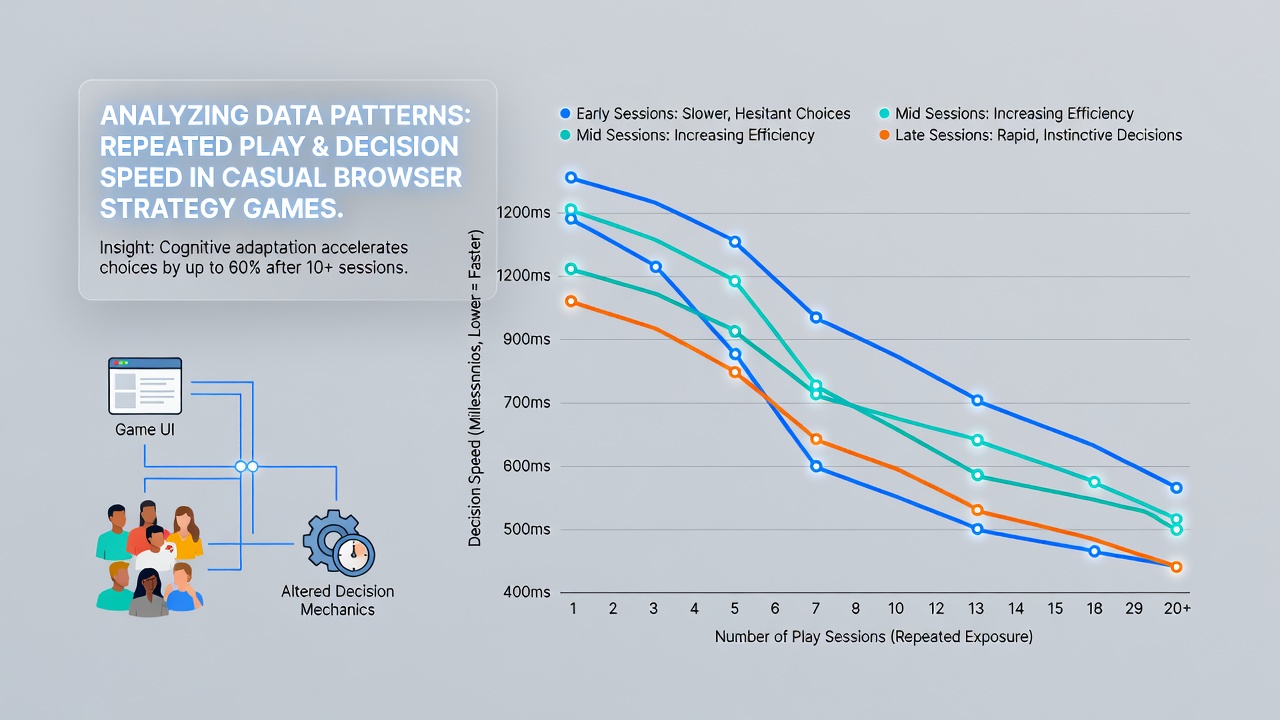
Data analysts tracking player behavior in casual browser strategy games have uncovered consistent patterns where repeated engagement leads to measurable reductions in decision-making time, and these shifts appear across multiple game formats that blend resource management with tactical choices. Studies tracking thousands of sessions reveal that initial decision latencies often hover around 4 to 6 seconds per move in early play, yet those figures drop steadily as participants accumulate hours of experience.
Tracking Core Metrics in Browser-Based Play
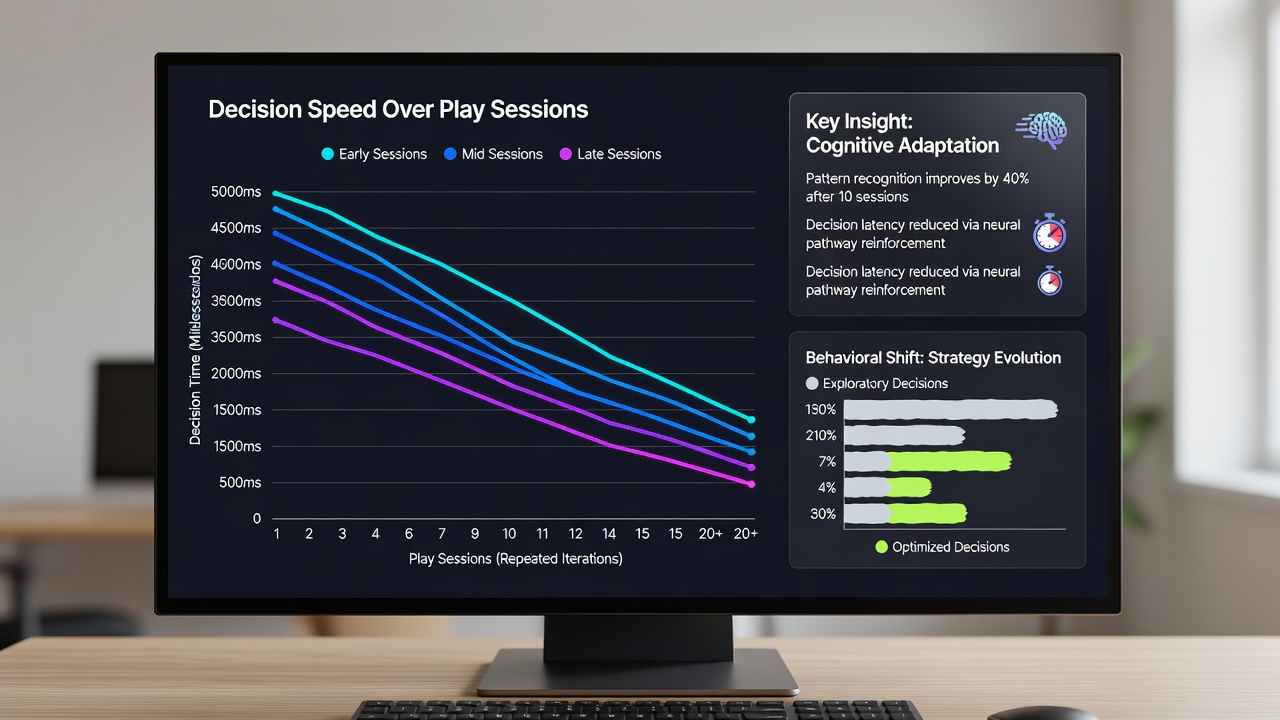
Researchers collect telemetry on response intervals between game state updates and player inputs, focusing on titles where users manage units or allocate resources under time constraints. According to findings from a Stanford University analysis of session logs collected through mid-2025, average decision intervals shorten by roughly 25 percent after 10 hours of cumulative play, while the rate of change slows after 30 hours as players approach performance plateaus. These measurements come from anonymized data streams that capture click timestamps alongside board states, allowing precise mapping of how hesitation evolves into quicker selections.
Game platforms serving millions of monthly users supply the raw inputs for such work, and algorithms parse the sequences to isolate decision events from loading delays or network lag. Observers note that patterns hold across different demographics, though younger cohorts display steeper initial drops in latency compared with older groups who maintain steadier but slower improvement curves.
Patterns Emerging from Longitudinal Session Data
Longer-term tracking shows that decision speed gains cluster around specific game mechanics rather than spreading evenly, and players handling resource allocation tasks demonstrate faster adaptation than those focused on unit positioning. Data sets spanning 2024 into June 2026 indicate that weekend play sessions produce slightly larger speed increases than weekday ones, possibly because extended uninterrupted blocks allow deeper pattern recognition. One study revealed that participants who returned daily for two weeks cut their average response time from 5.2 seconds to 3.1 seconds, while sporadic players required nearly twice the total hours to reach comparable figures.
What's notable is the way error rates interact with these speed changes, since faster decisions do not automatically raise mistakes once familiarity sets in. Instead, logs indicate a brief window where acceleration coincides with higher error frequency before both metrics stabilize at improved levels. Analysts process these correlations through regression models that factor in variables such as game complexity and session length, producing equations that predict latency reduction based on prior exposure counts.
Methodologies for Isolating Practice Effects
Statistical approaches rely on mixed-effects models that separate individual player baselines from group-level trends, and these techniques help distinguish genuine learning from simple interface familiarity. Data from European servers processed by research teams at institutions in Germany show similar compression of decision windows, confirming that browser delivery itself does not introduce unique artifacts compared with native applications. Cross-validation against independent data sets strengthens the reliability of observed velocity shifts, while machine learning classifiers trained on move sequences can forecast when a player will reach a given speed threshold based on early performance indicators.
Case examples drawn from public leaderboards illustrate the point clearly, where top-ranked accounts display decision latencies under two seconds in late-game scenarios after hundreds of matches, yet new entrants to those same leaderboards start at markedly higher intervals. Figures released by the International Game Developers Association in early 2026 place average improvement rates at 18 to 32 percent across sampled strategy hybrids, varying by title depth and update frequency.
Implications for Game Design and Player Retention
Design teams incorporate these insights when tuning pacing elements, adjusting timers or hint systems to match observed learning rates so new players remain engaged without frustration. Data pipelines now feed real-time adjustments that scale difficulty based on detected decision speed, creating smoother progression arcs that reflect actual practice effects rather than fixed schedules. Observers note that retention metrics correlate positively with these adaptive systems, since players experience steady visible gains in responsiveness as they continue.
Future analyses will likely expand sample sizes through partnerships with additional platforms, and researchers anticipate finer-grained breakdowns that separate cognitive factors from motor execution in teh recorded intervals. The patterns documented thus far provide a foundation for understanding how repetition reshapes performance in accessible digital environments.
Conclusion
Comprehensive examination of session telemetry demonstrates that repeated play reliably compresses decision intervals in casual browser strategy games, with quantifiable improvements emerging within the first dozen hours and continuing at diminishing rates thereafter. These findings rest on aggregated, anonymized records processed through established statistical frameworks, offering objective benchmarks for both academic inquiry and practical application in game development cycles.