Decoding trigger-based progression systems in hybrid browser adventure arcade games
Written by Cameron Baumann · Jun 7, 2026
Decoding trigger-based progression systems in hybrid browser adventure arcade games
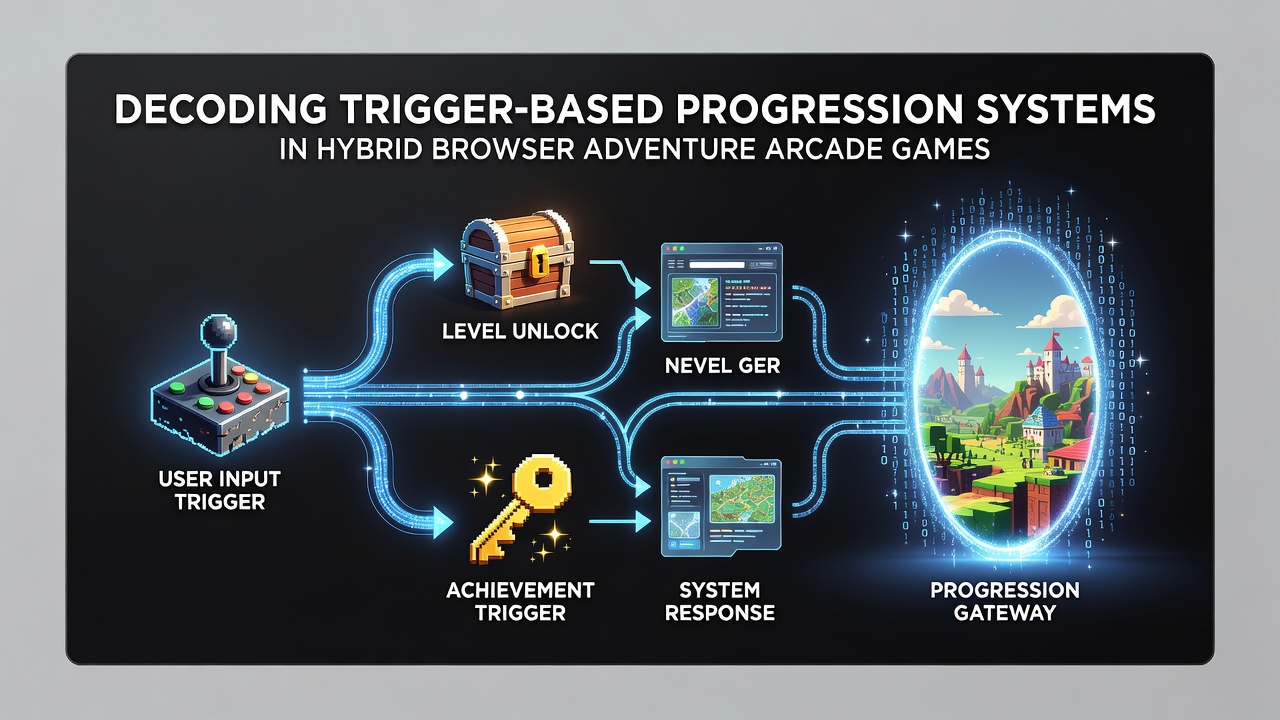
Trigger-based progression systems form core architecture in many hybrid browser adventure arcade games, where player actions activate specific conditions that advance narrative elements, unlock arcade challenges, or shift resource states within unified gameplay loops. These systems rely on predefined event flags that respond to inputs like item collection, enemy defeats, or spatial positioning, and they integrate adventure exploration with fast-paced arcade sequences without requiring separate loading screens in browser environments. Developers implement triggers through scripts that monitor variables in real time, allowing seamless transitions between puzzle-solving segments and high-speed action phases. Data from industry reports indicates browser-based titles using these mechanics saw increased session durations in early 2026, as players navigated layered environments where one action cascades into multiple outcomes.Core Mechanics of Trigger Activation
Triggers operate via condition checks embedded in game code, such as collision detection or inventory thresholds that fire when criteria match. In hybrid setups, an adventure map might contain hidden nodes that activate arcade mini-games upon approach, while arcade scores feed back into story branches by altering character attributes or world states.
Researchers at various institutions have documented how these conditional layers reduce friction compared to traditional menu-based progression, since actions remain continuous within the browser window. One study from a Canadian university highlighted patterns where trigger density correlates with retention metrics across mixed-genre titles hosted on platforms like freesitegame.com.Integration with Browser Technologies
HTML5 and WebGL frameworks support these systems by handling state persistence through local storage or server-side calls, which became more refined following updates rolled out around June 2026. At that time, several major browser engines improved event loop efficiency, enabling smoother trigger responses in multiplayer-adjacent adventure arcs where multiple users influence shared triggers indirectly.
According to figures from the Interactive Software Federation of Europe, adoption of such optimized triggers grew notably in casual hybrids during that period, as developers leveraged WebAssembly for complex conditional logic without performance drops.
Examples Across Game Formats
Consider titles where reaching a specific coordinate on an explorable grid instantly launches an arcade sequence, with success metrics then unlocking adjacent adventure zones. Observers note this pattern appears frequently in games blending strategy resource management with reflex-based challenges, creating feedback where progression feels organic rather than gated by explicit objectives.
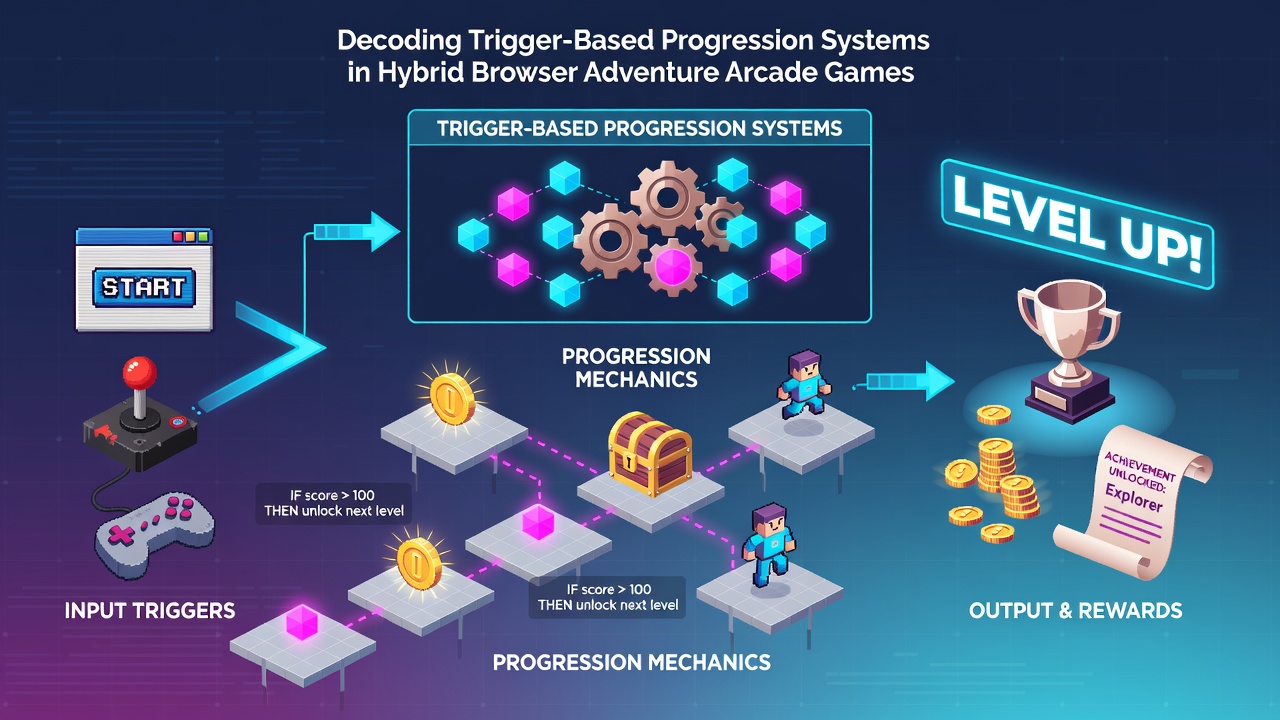
There's this case where experts analyzed logs from similar hybrids and found chains of triggers often span five to seven interdependent events before a major milestone unlocks. Those chains maintain player momentum by alternating between deliberate exploration and rapid input sequences, and they adapt based on prior choices without resetting the session state.
Data Patterns and System Evolution
Analytics platforms tracking browser game interactions reveal trigger-based systems frequently appear in titles updated post-2025, with June 2026 marking a wave of refinements in how triggers handle concurrent player inputs in shared worlds. Government data from the Australian Classification Board on digital entertainment usage showed corresponding rises in engagement for games employing these adaptive mechanisms over static level designs.
What's significant is how triggers enable dynamic difficulty scaling, where repeated activations adjust enemy behaviors or puzzle complexity based on accumulated flags. This approach draws from established game design principles while fitting constraints of browser delivery, such as limited local processing power and variable network conditions.
Challenges in Implementation
Balancing trigger visibility presents ongoing considerations for developers, since overly obvious cues diminish discovery elements central to adventure components, whereas hidden ones risk frustrating players during arcade bursts. Research indicates modular trigger architectures help mitigate these issues by allowing independent testing of each conditional branch before full integration.
Industry associations like the Entertainment Software Association have compiled reports noting that effective debugging tools for these systems emerged more widely by mid-2026, supporting creators working across adventure and arcade hybrids in web formats.
Conclusion
Trigger-based progression continues to shape hybrid browser adventure arcade experiences through precise event handling that connects exploration and action without disrupting flow. As browser capabilities advance, these systems adapt to support richer interactions while maintaining accessibility across devices. Data from multiple regions underscores their role in sustaining player interest, with ongoing refinements likely to expand their application in future titles.