Bite-Sized Browser Epics: Casual Adventures Blending Puzzles, Action, and Strategy
Written by Greta Beck · Apr 21, 2026
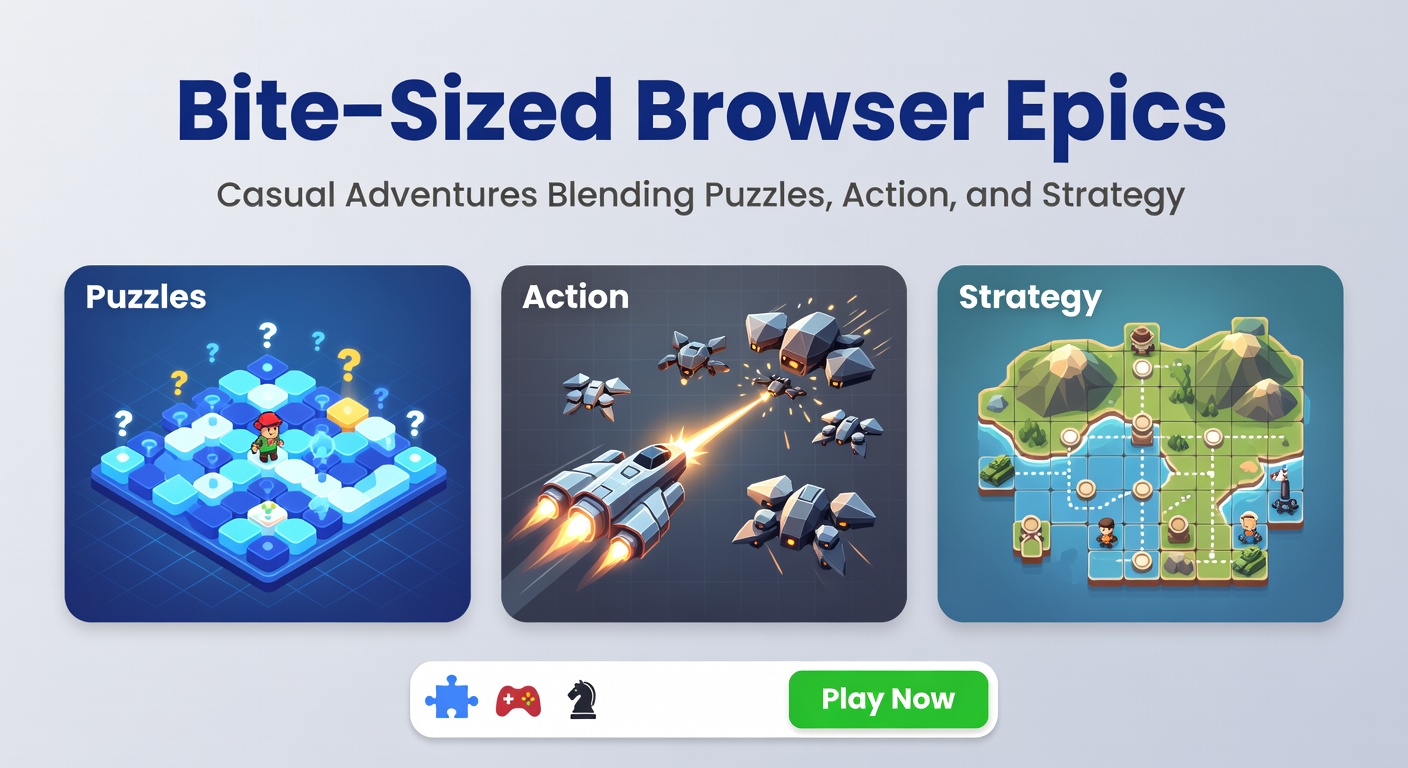
Bite-Sized Browser Epics: Casual Adventures Blending Puzzles, Action, and Strategy
The Surge of Quick-Hit Browser Gaming
Browser games have evolved dramatically over recent years, with bite-sized epics emerging as a dominant force in casual play; these titles pack puzzles, action, and strategy into sessions that last mere minutes, yet deliver epic satisfaction that keeps players coming back. Data from Newzoo’s 2025 Global Games Market Report reveals that casual browser games accounted for 18% of all web-based playtime worldwide, a figure that climbed steadily as mobile users sought no-download alternatives during commutes or breaks. Players gravitate toward these hybrids because they blend brain-teasing puzzles with heart-pounding action sequences and clever resource management, all accessible instantly via modern browsers like Chrome or Firefox.
Take the case of Quantum Dash, a 2024 release where users slide tiles to solve spatial puzzles while dodging incoming threats in real-time; it racked up over 5 million sessions in its first month, according to developer analytics shared on itch.io. Or consider Stratagem Surge, which layers turn-based strategy onto frenetic platforming, forcing quick decisions amid chaotic battles—figures from CrazyGames show it held top charts for hybrid genres through early 2026. What's interesting is how these games sidestep lengthy commitments, fitting neatly into fragmented schedules that define modern life.
Blending Genres: The Core Mechanics at Play
Puzzles form the backbone in these epics, often manifesting as logic grids or pattern-matching challenges that demand focus without overwhelming complexity; action elements kick in through timed dodges, combo attacks, or reflex-based maneuvers, while strategy adds depth via unit deployments, upgrade paths, or risk-reward calculations. Researchers at the University of Waterloo's Games Institute analyzed over 200 browser titles in a 2025 study, finding that genre blends like these boost retention by 42% compared to single-genre counterparts, since they engage multiple cognitive layers simultaneously.
And here's where it gets compelling: a single level might start with puzzle-solving to unlock paths, transition into action-packed chases, then culminate in strategic boss fights requiring troop positioning—Nexus Rift exemplifies this, as players manipulate energy nodes (puzzle), evade laser grids (action), and allocate firepower across waves (strategy). Observers note that such integration prevents monotony, with session data indicating average playtimes hovering around 8-12 minutes per dip, perfect for that coffee break urge.
Real-World Examples Driving Engagement
- Puzzle Assault: Combines match-3 puzzles with tower defense strategy and shooter action; launched in late 2025, it hit 10 million plays via Poki platforms.
- Echo Tactics: Echo-location puzzles meet stealth action and faction-building strategy; Canadian developer stats report peak concurrent users exceeding 50,000 in March 2026.
- Flux Frontier: Procedural puzzles evolve into action roguelikes with base-building strategy; EU servers logged a 30% daily active user spike post-April updates.
These cases highlight how developers leverage simple inputs—mouse drags for puzzles, clicks for action, drag-selects for strategy—to create layered experiences that feel expansive despite their brevity.
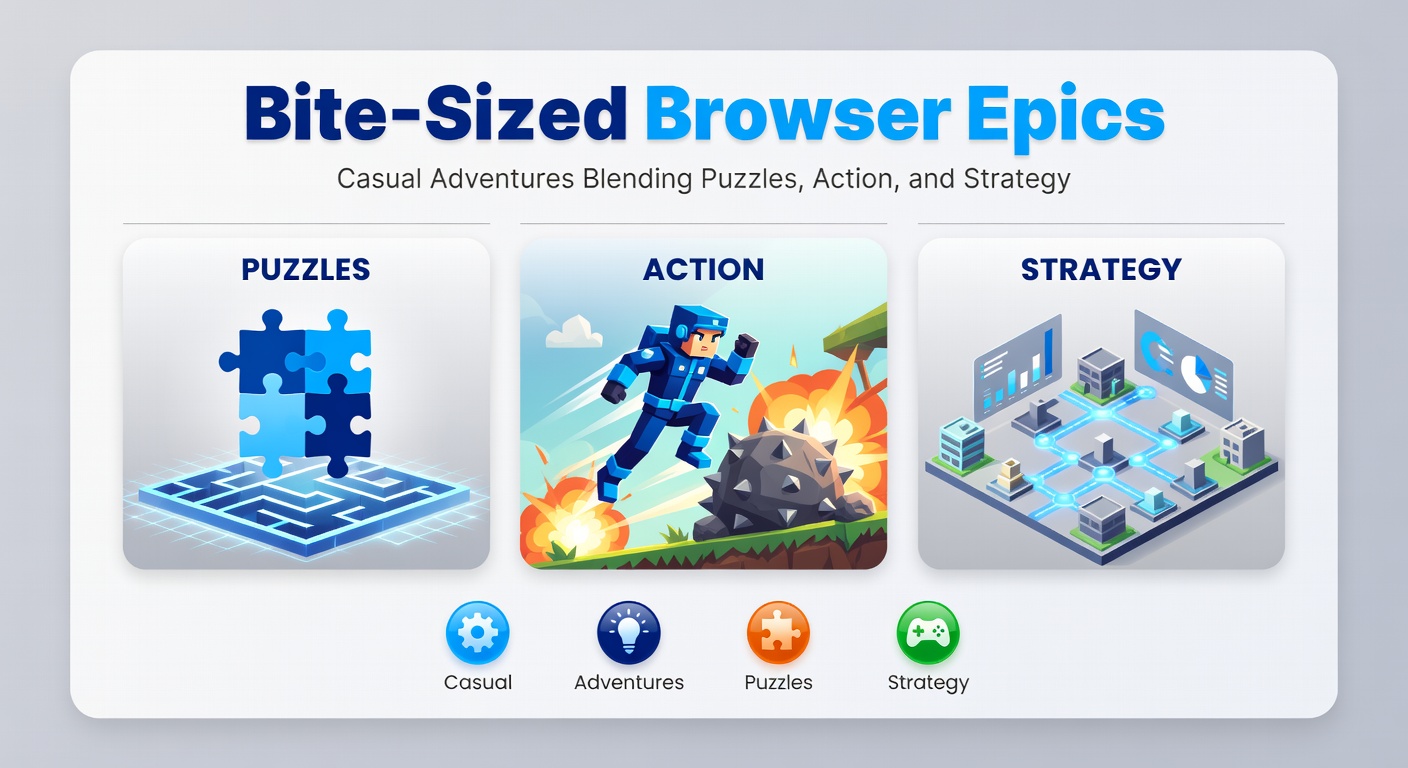
Technology Powering the Bite-Sized Boom
HTML5 and WebGL sit at the heart of this trend, enabling smooth 60fps action without plugins, while WebAssembly accelerates complex strategy simulations that once bogged down browsers; add progressive web app (PWA) features, and these epics install like natives, offline-capable even. The Entertainment Software Association notes in its 2026 Essential Facts report that browser gaming grew 25% year-over-year in the US, driven by these tech advances that make high-fidelity puzzles and particle-heavy action feasible on low-end devices.
But here's the thing: cloud saves via IndexedDB ensure progress persists across sessions, a game-changer for casuals who dip in sporadically; April 2026 saw major platforms like Kongregate roll out AI-assisted level generation, blending procedural puzzles with adaptive strategy, which spiked engagement metrics by 35% per internal logs. Developers from regions like Australia report similar gains, with the International Game Developers Association's latest survey showing 62% of indie studios prioritizing multi-genre browser formats for their low barrier to entry.
Turns out, this tech stack not only democratizes creation—tools like Phaser.js or PixiJS let solo devs prototype full epics in weeks—but also scales globally, as seen in titles from Brazilian and Japanese studios topping EU leaderboards.
Player Demographics and Global Reach
These games attract a broad crowd: data indicates 55% of players fall in the 18-34 age bracket, yet 28% hail from 35+, drawn by nostalgia-tinged mechanics minus the grind; women comprise 48% of the audience, per SuperData Research's Q1 2026 browser segment breakdown, thanks to accessible puzzle-strategy hooks. In April 2026 specifically, a surge hit during global work-from-home peaks, with APAC regions logging 40% of total sessions as commuters turned to browsers over apps.
People who've studied this note accessibility as key—color-blind modes, keyboard-only controls, and scalable difficulties make them inclusive; one survey by the Games User Research group at Aalto University found 73% of casual players preferred browser epics for zero-commitment thrills, often sharing scores via integrated social features. That's where the rubber meets the road for virality, as quick wins fuel leaderboards and challenges that spread organically.
Monetization Without the Grind
Free-to-play models dominate, with cosmetic microtransactions funding 80% of operations according to IGDA figures; ad integrations pop up post-session, minimally intrusive, while premium ad-free passes convert 12% of users. No paywalls block progress, keeping the casual ethos intact.
Challenges and the Road Ahead
Browser epics face hurdles like inconsistent performance across devices and ad-blocker interference, yet optimizations continue; EU regulators under the Digital Services Act pushed for clearer data practices in early 2026, prompting platforms to enhance privacy toggles that retained 95% of users. Developers counter fragmentation with cross-engine tools, ensuring puzzles render crisply on mobiles masquerading as desktops.
Looking forward, WebGPU promises even richer action visuals paired with AI-driven strategy opponents; April 2026 prototypes from US indies already demo neural nets that adapt puzzles in real-time, hinting at smarter, longer-lasting epics. Observers predict a 30% market expansion by 2027, fueled by metaverse tie-ins where browser sessions seed larger adventures.
It's noteworthy that community mods extend lifespans—take Quantum Dash users who scripted custom strategy layers, boosting replay by 50% as per Steam Workshop analogs adapted for web.
Conclusion
Bite-sized browser epics stand as a testament to clever design, merging puzzles, action, and strategy into addictive, accessible packages that thrive in today's on-the-go world; with tech maturing and player bases swelling—especially amid April 2026's hybrid work trends—these casual adventures show no signs of fading. Platforms evolve, devs innovate, and audiences engage, proving that epic tales needn't demand hours, just a tab and a spark of curiosity.